Protecting Rights of Homeless Families
Challenges and Recommendations
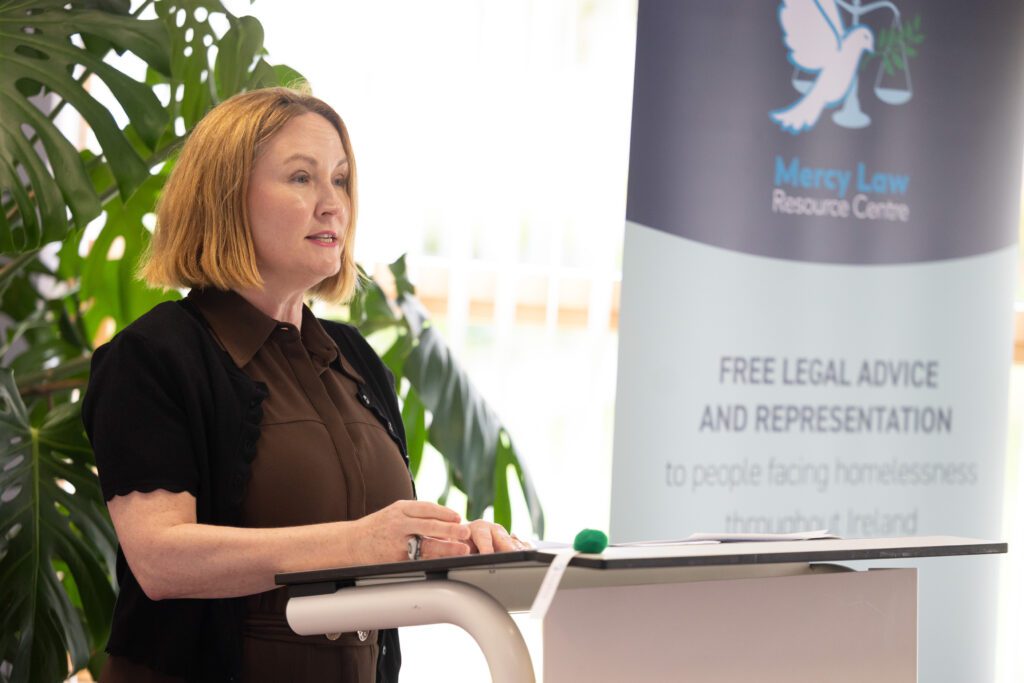
The urgent need for action to protect the rights of families in emergency accommodation has been highlighted in pioneering research. Community Foundation Ireland Director of Social Impact Moninne Griffith says families, children and survivors of domestic violence need protection.
Equality
The protection of rights is central to the equality mission of Community Foundation Ireland, its philanthropists and supporters – it guides all our work with over 5,000 voluntary, community and charitable organisations.
That mission makes the Community Foundation a natural partner for “Family Homelessness and the Law: Current Challenges and Recommendations for Reform” by the Mercy Law Resource Centre.
At the outset I want to say that the Foundation endorses the report, its findings and its recommendations.
You are providing the evidence for action based no only on strong legal interpretation – but perhaps most importantly the experiences and the testimonies of the people and families in the frontline of this crisis.
Shame
Today there are children who do not know where they will sleep tonight. They do not know if they will make it to school, if they will meet their friends or if they will get the opportunity to sit at a table and have something to eat.
At the outset the authors of the report set out the context in which Mercy Law and other frontline services operate.
All of us should feel shame that almost 5,500 children are living in emergency accommodation at a time when at least on paper our country remains wealthy. A figure which is thought to be higher when hidden homelessness is included.
The resulting trauma is highlighted throughout the report.
Newly homeless families expected to navigate complex systems and red tape on their own when they need the most support.
Yet at that very moment of vulnerability, of mental stress and extreme fragility our national and local government systems fall short – often adding to the anguish, the hurt and the isolation.
Rights
The denial of rights is the very definition of injustice, discrimination and inequality.
This report finds multiple examples where the rights of people and families are put to one side – in favour of misguided, misinformed and even illegal bureaucracy.
The findings cannot be clearer.
- When a family is denied emergency accommodation because they are not on a social housing list. That is illegal.
- When families are denied emergency accommodation because of rent arrears. That is illegal.
- When families are denied accommodation because they do not have a connection to a local area. That is illegal.
Local authority service providers may regard these oversights as paperwork or omissions which need correcting – but for those who face sleeping on our streets, on park benches or in between recycle bins in car parks the consequences are devastating.
Their voices come through in the case studies which support the legal arguments for reform throughout this report.
A family of six children about to be left on the streets by a council because they were not on a social housing list.
A sofa surfing single mother down to her last wage denied her rights because of illegal misinterpretation of social housing rules.
An exhausted woman and two children facing health challenges illegally denied support because of rent arrears.
Domestic Violence
The national crisis which is domestic violence comes through loud and clear as a significant contributor to homelessness. Noting it is a factor in 16 of the 37 family cases highlighted by the Mercy Law Centre.
What is particularly shocking is an apparent expectation that women and children completing a stay in a refuge or place or shelter – should consider returning to a violent home.
Bureaucracy is given more weight than that real life dangers and threats.
Instead of denying these families homeless assessments or supports, there should be a strong consideration of key domestic violence principles and other obligations to be supportive of victim-survivors.
Likewise, the rights of people living with disabilities and the rights of families to remain united and split up across multiple accommodations need to be recognised and honoured.
Recommendations
When Community Foundation Ireland partners with experts like the Mercy Law Resource Centre we do so to find a way forward and solutions which can help us achieve our overall equality mission.
We do so informed, by our connectivity with organisations on the ground telling us where the gaps and challenges exist. We also do so to meet the expectations of visionary philanthropists and supporters who take a strategic view and want to make a difference.
The eight recommendations made by the Law Centre provide that way forward.
The need for training to ensure local authority homeless service staff are aware of their legal obligations is essential.
Your calls to ensure the best interests of the child central to the decision-making process equally so – as is the ending of the practice of splitting up families.
The Government must now honour its commitment to update guidance for local authorities on the provision of emergency accommodation to those fleeing domestic violence.
Acknowledgements
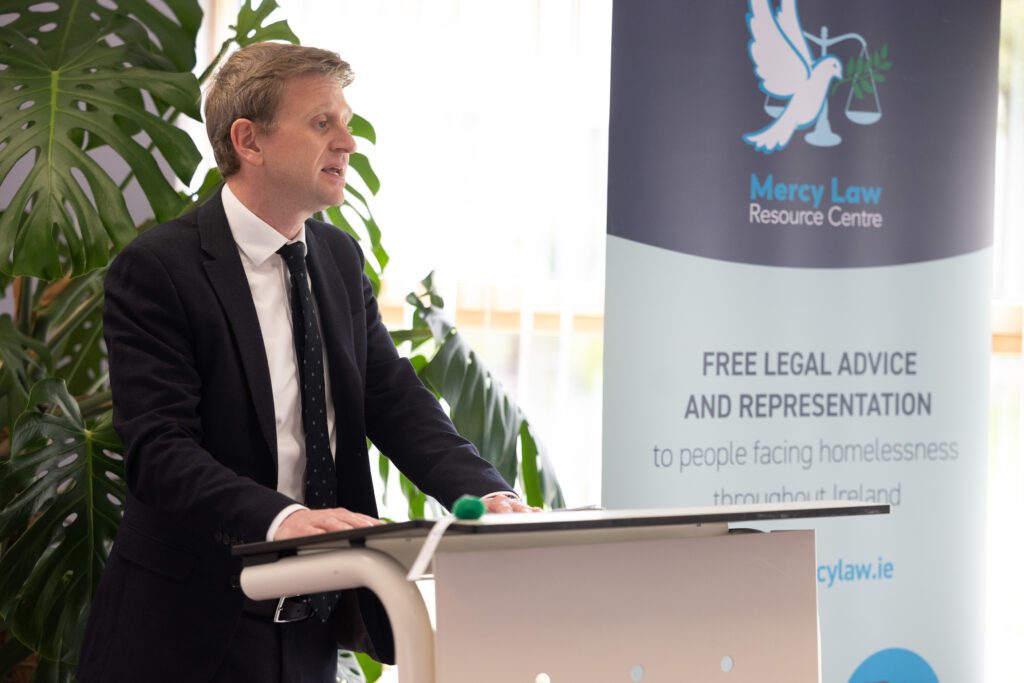
All the team at the Mercy Law Resource Centre have made a very important contribution to the issue of human, family and child rights within emergency accommodation with the publication of this report.
The 37 families sharing their experiences have shown generosity and bravery which has the potential to benefit many others in a similar situation. We owe each of them a debt of gratitude.
Overall, this report and its recommendations powerfully demonstrate a strategic approach which has always been central to the work of the Mercy Law Resource Centre.
I congratulate everyone involved in producing a document which is accessible, thought-provoking and a must read for all who believe in a fairer and better future.
Join Our Mission
If you want to join our philanthropic mission please do check out our Strategic Giving Guide.