
Sex for Rent Outlawed
Strategic Philanthropy Provides the Evidence for Change
Outlawed
The outlawing of ‘sex for rent’, where landlords seek sexual acts as payment from tenants, is significant not just because of the passing of legislation, but for the broad coalition of support rallying behind it. Denise Charlton examines the strategic role of philanthropy in the campaign, and the next steps needed to end this exploitation.
As a society this week we are rejecting this exploitation. The introduction of specific offences enjoys political support crossing divides – but more importantly has rallied a broad coalition of front-line services, researchers, advocates and many others in the wider public.
The creation of the new offences brings much needed clarity, ending a reliance on existing or old laws which did not truly capture the evolving nature of exploitation and risked allowing offenders to escape justice.
Important awareness raising put the spotlight on this issue and has played no small part in fast-tracking positive policy change.
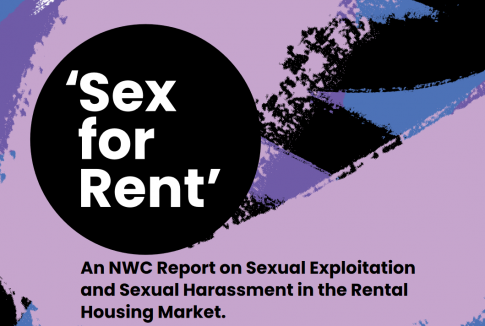
Investigative journalism at the Irish Examiner led by correspondent Ann Murphy and pioneering research undertaken through a philanthropic partnership between the National Women’s Council and Community Foundation Ireland highlighted how predator landlords are exploiting the housing crisis.
Those testimonies, the evidence and the research have been heard by a public which has been genuinely shocked and in turn our lawmakers. Legal change coming just two-years after the research was produced is an achievement, not easily achieved in the complex world of political persuasion followed by the careful crafting and passing of legislation.
The rallying of cross-political support speaks to the strength of both the evidence gathered and subsequent education and awareness raising.
What Happens Next?
The creation of the named offence of sex for rent marks the achievement of the main recommendations of the 2024 research – however there are others which must be delivered to ensure all tenants are safe.
The experience of other laws aimed at ending sexual violence tell us that passing bills is one thing, ending the exploitation can be another. We see that in terms of prostitution which is recognised as gender-based violence – yet pimps can still pocket millions by usurping our laws online.
The passing of the sex for rent law is a rallying call for regulators, state agencies and frontline services to step up and recognise their role in bringing these crimes to an end. All now have obligations.
The remit of the Residential Tenancies Board needs to be quickly expanded to ensure there are no loopholes and that the intended legal protections extend to everyone. The role of the board must also be further expanded to raise awareness, investigate complaints and remove predator landlords from its register.
Safeguards must be consistent both on and offline. Renting and tenancy arrangements lean heavily on internet advertising across a wide range of digital and social platforms as well as user-to user communications – the online safety commissioner must include all within its general remit.
Once again social media companies must step up to their responsibilities. Those who fail to filter ads seeking exploitation should be subjected to financial penalties.
Overall Government, its agencies as well as civil society which provides both frontline support and advocacy must ensure that the upcoming fourth National Strategy to Combat Domestic, Gender Based and Sexual Violence captures the need for these and other actions.
Housing
Any honest and frank examination of how we have arrived at the need for such measures must recognise that the housing crisis has been a major contributing factor to sex for rent exploitation.
Accommodation pressures forcing many people into rental arrangements which are far from satisfactory. The pressure is even greater for those who are marginalised, in particular women. Those living with disabilities, from minority groups and survivors of other forms of sexual abuse are all particularly vulnerable.
If we want to hold true to the intent of our new laws we must collectively solve the housing crisis.
Society Free from Sexual Violence
This is a positive policy moment in our move towards a society which is free from sexual violence. Thanks to dedicated campaigners and advocates the dial is moving, yet we must also be very conscious of very recent violent incidents underlining the urgent need for us to move faster.
As a philanthropy partner, Community Foundation Ireland with its philanthropists and donors have worked with partners combatting sexual violence for the past 26-years – and we continue to do so.
Together we help provide places of safety for those fleeing violent homes, supports including trauma services, we have successfully achieved the recognition of coercive control in domestic violence laws, the introduction of consent classes and recognition of prostitution as gender-based violence.
Each a strategic intervention lifting the cloak on the scourge of exploitation which has been hiding in plain sight.
As we take another step forward on ending sex for rent we must commit to maintaining the momentum to achieve our ultimate goal where everyone can feel safe at home, work, school and all parts of our communities.
Denise Charlton is Chief Executive of Community Foundation Ireland, a philanthropic hub which works with 5,000 voluntary, community and charitable partners on an equality mission. Since 2000 more than €170M has been provided in philanthropic grants.
Community Foundation Ireland
Community Foundation Ireland mobilises strategic philanthropy to advance equality, strengthen communities and protect climate and nature. A philanthropic hub our priority pillars are people, place and planet. People helps ensure everyone can live with dignity, feel part of their community and wider society. Place means working with partners to support communities where everyone participates. Planet is our response to the crisis in climate and nature at every level. The Foundation was established in 2000.