Chief Executive, Community Foundation Ireland
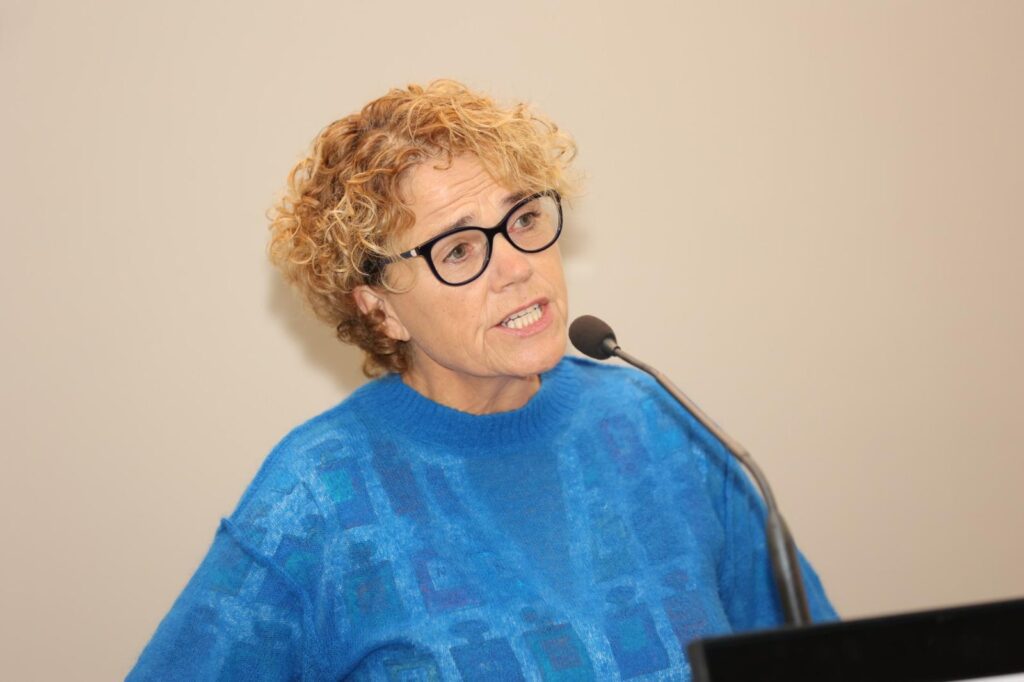
Community Foundation Ireland’s partnership with the Economic and Social Research Institute always provides findings which provoke debate and inform policies – today’s report is no different.
Providing an understanding of how the general public views welfare benefits and the role those payments play in narrowing the income or wealth gap, this is a body of work which is informative and thought provoking.
From a Community Foundation perspective, it is also a project which would not have happened without the support of philanthropic donors who share our vision and mission of equality within communities, where people and nature thrive.
With the expertise of the researchers at the ESRI, this research is a crucial understanding of public views – and how they can be formed or mis-informed by political and public discourse.
All who believe in achieving true equality can take a lot of comfort from the findings.
Even at a time of huge uncertainty with many competing demands and pressures on public finances, people remain steadfast in their support for a fairer distribution of income or wealth.
Three out of four agree that Government must act to reduce income differences. – notably the highest levels of support include women and younger people.
This is echoed with very strong public acknowledgement of the role played by various forms of welfare payments. Benefits for older people and childcare enjoying strong popular support.
Overall, more than half of us, some 53%, view social benefits as important to achieve a fair and equal society. The understanding of the importance of welfare in Ireland is higher than in many other European countries.
While the report illuminates a broad public understanding and appreciation of welfare in Ireland, it also contains words of caution with mixed attitudes towards specific welfare policies.
For example, the needs of older people and families in need of childcare are viewed as more deserving of support than people seeking employment.
There are lessons in these more nuanced attitudes. When public awareness around the benefits and even the opportunities provided by the welfare system increases – so too does support for income redistribution.
In contrast, when the system is framed negatively in political or public debate, support not only slips but changes in terms of perceptions of those reliant on welfare payments not only to make ends meet but also to access education, training or work.
There is thus an onus and a responsibility on those involved in such discourse to be aware of the impact their words and language can have.
People accessing welfare are far more likely to be availing of rights and entitlements rather than being self-serving or abusing a system.
The importance of framing, challenging misconceptions and rejecting negative stereotypes cannot be over-stated.
Community Foundation Ireland views research, evidence and findings such as those from the ESRI as essential in achieving our equality mission.
Informing our actions, where our philanthropy can make a difference and also a resource and growing body of knowledge which our 5,000 partners working on the ground, other researchers and advocates can draw on.
We place significant value on our research partnerships across a range of areas reflecting our focus on delivering for people, place and planet.
This research will be considered not just on the individual findings but also to complement and strengthen other areas – not least the pressing issue of child poverty.
Through partnerships with the Institute as well as the Children’s Rights Alliance and many community partners, we have put a focus on the need to address child poverty.
We have done so with some success in terms of school meals for every child, pilot projects on holiday hunger as well as increases in universal benefits.
The argument for targeted benefits – so those who need more assistance get more support – is compelling. Yet it cannot be achieved unless there is a deep public understanding and appreciation of the role those benefits can play.
If we fail to grow that understanding, then 250,000 of our children could be left living in the reality of poverty.
That is the importance we place on this work.
I am delighted that shortly we will hear from Louise Bayliss and look forward to her perspective.
I want to acknowledge and congratulate the researchers on this important body of work – Daniel, Bertrand and Helen with other colleagues.
Community Foundation Ireland for one will be studying your work and using it to inform our future actions.
Thank You.
Details of The Main Findings
View The Full Report
If you are interested in supporting pioneering research such as our partnership with the ESRI, please check out our Strategic Giving Page.
© 2026 Community Foundation Ireland
Company Registration No: 338427 Charity No: CHY 13967 Registered Charity Number (RCN): 20044886
