
Ageing Ireland: Why Partnership Matters
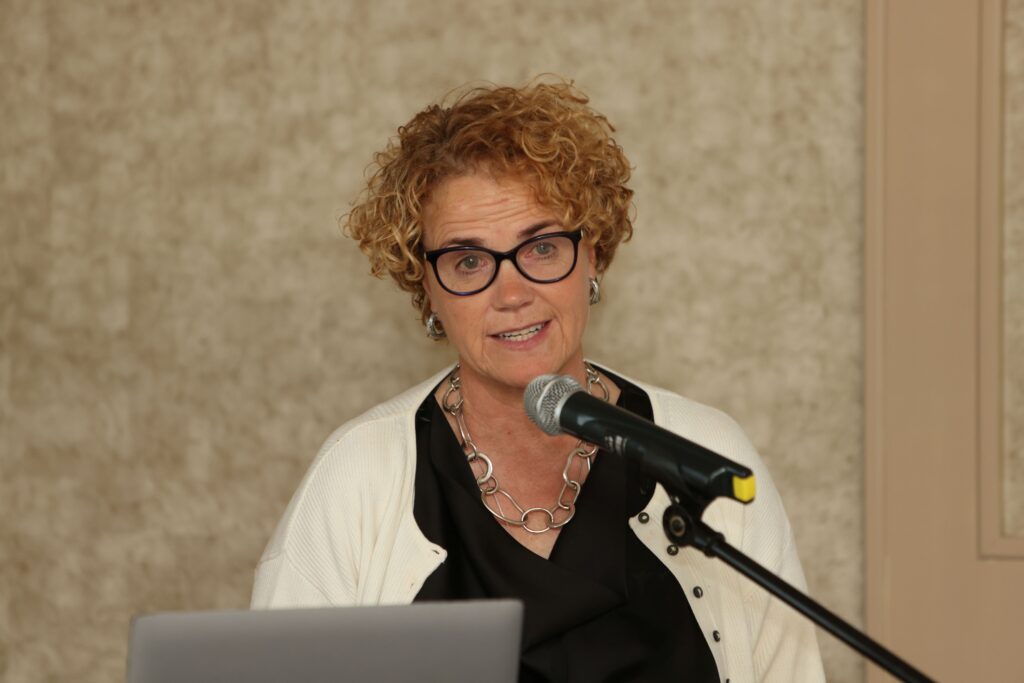
Ireland is changing. For much of the past generation, conversations about demographics have focused on youth, growth and the demands of a growing population. Yet another reality is now becoming increasingly visible. We are living longer. Many more of us can expect to live into our eighties, nineties and beyond. Denise Charlton reflects that while this is something to celebrate, longevity also raises important questions.
Questions for Today
How do we ensure people can remain connected to their communities as they age? How do we create housing that supports independence? How do we address loneliness and social isolation? How do we ensure that people can continue to participate, contribute and thrive throughout later life?
These are not questions for the future. They are questions for today.
That is why the launch of Taking Stock 2026 by the Alliance of Age Sector NGOs is so important. The report does not seek to create new commitments. Instead, it examines commitments already made and asks whether they are being implemented in ways that genuinely improve people’s lives.
There is an important lesson in that approach.
Too often, public debate focuses on announcing policies. The harder task is implementation. Change happens when responsibilities are clear, resources are available and progress is monitored. The gap between ambition and lived experience is where many well-intentioned policies struggle.
The report reminds us that ageing is also not a single-issue policy challenge. It cannot be reduced to healthcare or social care alone. Housing, transport, income security, community safety, participation, digital inclusion, loneliness and ageism all influence how people experience later life.
In that sense, ageing is one of the best examples of why public policy cannot operate in silos.
The true test of an age-friendly society is not how it treats people when they become vulnerable, but whether people can continue to live independent, connected and purposeful lives for as long as possible.
At Community Foundation Ireland, we see positive ageing not as a single policy challenge but as part of a wider question: how do we build communities where people can flourish at every stage of life?
The Role of Philanthropy
At the Community Foundation, we often describe ourselves as Ireland’s philanthropic hub. Our work involves connecting people who want to contribute with organisations and communities that are creating change. Partnership sits at the heart of that approach.
When it comes to ageing, philanthropy has a distinct role to play.
It is not the role of philanthropy to replace the responsibility of the State. Public services, nationally agreed strategies and policy delivery remain matters for Government. Strategic philanthropy is most effective when it complements public action rather than substitutes for it. Its contribution lies elsewhere.
Strategic philanthropy can support research and evidence. It can bring organisations together around shared challenges. It can back innovative approaches that public systems may later adopt at scale. It can support the participation of people whose lived experience should help shape decisions. And it can help build the partnerships required to address complex social issues.
That is precisely why Community Foundation Ireland has been proud to partner with the Alliance of Age Sector NGOs.
The Alliance demonstrates what can be achieved when organisations work collectively rather than individually. Bringing together expertise, frontline experience and the voices of older people creates a stronger basis for both public debate and better policy.
A Bigger Conversation
The conversation about ageing is often framed around costs, pressures and demand. Those issues are real. But they are only part of the story.
An ageing population is also evidence of social progress. It reflects improvements in healthcare, living standards and quality of life. The challenge is not simply supporting a larger older population. The challenge is creating a society where longer lives are healthy, fulfilling and connected lives.
That means thinking differently about ageing.
It means seeing older people not solely as recipients of care but as active participants in communities. It means recognising the contribution that older people make as volunteers, mentors, carers, community leaders and family members. And it means designing policies that support independence, dignity and participation throughout life.
Looking Ahead
In the coming weeks, Community Foundation Ireland will publish new research exploring a question that will become increasingly important for Ireland: are we ready for a future in which many more people will live to 100?
The question is not simply about ageing.
It is about how we prepare as individuals, communities, institutions and policymakers for profound demographic change.
What kind of communities do we want to build?
What investments are needed today to create positive outcomes tomorrow?
How do we ensure that longer lives are accompanied by opportunity, security and connection?
These are questions that no single organisation can answer alone. They require government, civil society, communities, researchers and philanthropy to work together.
That is perhaps the most important message emerging from Taking Stock 2026. Progress on ageing will be achieved not through isolated interventions but through partnership, long-term thinking and a willingness to turn evidence into action.
Because ultimately, creating an Ireland where people can age well is not an issue affecting a minority of citizens. It is about the future many of us hope to experience ourselves.
Denise Charlton is Chief Executive of Community Foundation Ireland
Community Foundation Ireland
Community Foundation Ireland mobilises strategic philanthropy to advance equality, strengthen communities and protect nature and the environment. Working with more than 5,000 voluntary, community and charitable partners, it provides expertise, knowledge and support to ensure effective giving and lasting social impact. Since 2000, more than €170 million has been distributed in support of its mission.